Inquiry

Contact Us Download Brochure
×
Get In Touch

We're dedicated to helping business grow and succeed. With years of industry experience and a passion for problem-solving, we offer top-level consulting service tailored to your unique needs.

instagram-thumb3

© 2026 SNJ Labs Pvt. Ltd. All Rights Reserved. | Privacy Policy

Benefits of Outsourcing API Manufacturing to India: Cost, Quality & Global Advantage

The Key Advantages of Outsourcing API Manufacturing to India

By SNJ Labs | Published by SNJ Labs Pvt. Ltd.

For procurement and supply-chain teams, API sourcing decisions rarely revolve around price alone. Production capacity, regulatory history, lead times, technical support, and supply continuity often carry equal weight.

The challenge becomes even greater when commercial volumes increase or multiple markets need to be supplied from the same manufacturing network. That is one reason outsourcing API manufacturing to India remains part of the sourcing strategy for many pharmaceutical companies.

The country's manufacturing ecosystem offers a combination of scale, technical capability, and global market experience that continues to attract international demand.

You will learn about some major benefits of contract API manufacturing Indiaby reading this complete blog.

6 Key Benefits of Outsourcing API Manufacturing to India

1. Lower Capital Investment and Operating Costs

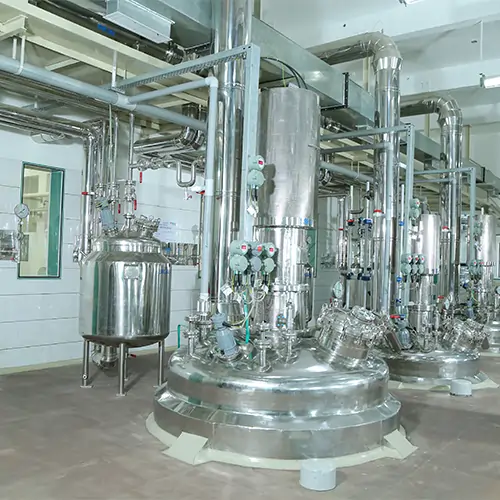
Setting up API capacity is rarely a small project. By the time reactors, utilities, laboratories, environmental systems, and validation activities are in place, the investment can be substantial. API outsourcing services gives companies another option using manufacturing assets that already exist instead of spending years building new ones.

2. Access to Established Manufacturing Infrastructure

Many pharmaceutical companies do not need additional facilities every time demand increases. In those situations, working with an API manufacturing company India already operating at commercial scale can be more practical than expanding internal manufacturing networks and waiting for new capacity to come online.

3. Regulatory-Ready Manufacturing Systems

Regulatory requirements rarely become easier once a product reaches commercial scale. Many companies exploring API manufacturing India are also looking for manufacturing partners that have already worked through inspections, documentation reviews, and customer audits. That experience can remove a considerable amount of uncertainty from future supply programs.

4. Availability of Skilled Pharmaceutical Talent

Chemical synthesis, process scale-up, analytical testing, validation, and regulatory documentation all depend on people with the right technical background. One reason pharmaceutical API manufacturing continues to expand in India is the depth of experience available across manufacturing, quality, engineering, and regulatory functions.

5. Greater Manufacturing Scalability

Manufacturing requirements rarely stay fixed for long. A product that needs a few hundred kilograms today may require several metric tons a year later. In those situations, available reactor capacity, production scheduling, and facility resources start becoming part of the conversation. That is where larger manufacturing networks often have an advantage.

6. Capability to Produce Complex APIs

Not every API follows a straightforward manufacturing route. Some products involve sensitive reaction conditions, challenging purification steps, or highly specialized process controls. Complex molecules such as Iron Sucrose, Sucralfate, and Alpha Ketoanalogue salts often demand a level of manufacturing experience that goes beyond routine chemical production.

Why India Continues to Attract Long-Term API Programs

Pharmaceutical companies rarely move a product from one manufacturing network to another without a reason. The effort involved in technical transfers, documentation reviews, validation activities, and regulatory updates can be substantial.

That is why long-term outsourcing decisions often receive more attention than short-term purchasing decisions. Once a supplier becomes part of a commercial program, consistency starts carrying more weight than initial pricing discussions.

India's manufacturing ecosystem has been built over decades rather than years. API producers, raw material suppliers, engineering service providers, analytical laboratories, logistics partners, and regulatory specialists often operate within the same industrial networks. For companies evaluating outsourcing options, that concentration of expertise can be difficult to ignore.

What Changes When an API Program Moves to Commercial Scale

Pilot-scale success and commercial-scale success are not always the same thing. Production planning becomes more complex, documentation volumes increase, and supply commitments become harder to adjust once products reach multiple markets.

This is often where infrastructure depth starts showing its value. Reactor availability, utility redundancy, warehousing capacity, and quality-system maturity tend to receive more attention when manufacturing requirements begin to grow.

Questions Worth Asking Before Selecting an API Partner

Supplier qualification rarely ends with a technical presentation. Most procurement and quality teams eventually look deeper into operational details.

Some of the questions that frequently come up include:

  • Has the manufacturer supported similar APIs at commercial scale?
  • How often has the facility undergone customer or regulatory audits?
  • What level of technical documentation is available?
  • Are Key Starting Materials sourced through approved vendor networks?
  • How much available capacity exists beyond current commitments?

The answers often reveal more than a capability brochure ever will.

Why Manufacturing Experience Still Matters

Equipment can be purchased. Facilities can be expanded. Experience takes longer to build.

An active pharmaceutical ingredient manufacturer handling complex chemistry, process scale-up challenges, and changing regulatory expectations over many years tends to approach problems differently than a facility encountering those situations for the first time. That accumulated experience often becomes visible during technology transfers, investigations, and commercial production planning.

Looking Beyond Cost During Supplier Selection

Cost remains part of every sourcing discussion, but few pharmaceutical companies make long-term manufacturing decisions based on pricing alone.

Whether evaluating a regional supplier or an API manufacturer India serves global markets through, procurement teams typically review several factors at once. Regulatory readiness, manufacturing consistency, technical support, supply-chain resilience, and available production capacity often remain under review long after commercial agreements have been signed.

A Practical Consideration for Long-Term API Sourcing

Selecting an API manufacturing partner usually involves more than comparing quotations. Questions around capacity, technical experience, documentation support, regulatory history, and long-term supply tend to remain part of the discussion throughout the evaluation process.

SNJ Labs manufactures APIs for pharmaceutical companies across multiple markets. Teams interested in a particular molecule can review the relevant manufacturing, quality, and regulatory information based on that specific product.

Frequently Asked Questions

Q.1. Is commercial-scale manufacturing experience important for every API?

A: It becomes particularly important when demand grows. Producing a few development batches and supporting long-term commercial supply are often very different operational challenges.

Q.2. How can companies assess whether an API manufacturer is suitable for long-term supply?

A: Manufacturers previous works many times provide useful clues. You can look for audit history, commercial-scale experience, available capacity, documentation practices, and customer support capabilities that are typically reviewed during supplier qualification.

Q.3. Is outsourcing API manufacturing to India mainly a cost-saving decision?

A: Not always. Cost is usually one factor among many. Manufacturing capacity, regulatory history, technical expertise, and supply continuity often become equally important once products enter commercial production.