Inquiry
Contact Us Download Brochure
By SNJ Labs | Published by SNJ Labs Pvt. Ltd.
Every tablet, injection, or suspension begins with a component that delivers the intended therapeutic effect: the active ingredient. That raises an important question for pharmaceutical companies: what is API manufacturing, and why does it sit at the center of drug development and production?
API manufacturing refers to the process of producing active pharmaceutical ingredients that become the foundation of finished medicines. From chemical synthesis and purification to quality testing and regulatory compliance, each stage influences the safety, efficacy, and consistency of the final product delivered to patients.
Ask someone outside the pharmaceutical industry what makes a medicine work, and they will usually mention the tablet or injection itself. In reality, the therapeutic effect comes from the active ingredient inside it. That distinction sits at the heart of what is API manufacturing.
A finished medicine contains more than one ingredient. Active pharmaceutical ingredients are responsible for the intended therapeutic effect, while excipients help with stability, delivery, taste, appearance, or shelf life.
Not all APIs are produced the same way. Some originate through complex chemical reactions, while others are derived from biological or fermentation-based processes. The manufacturing route depends largely on the nature of the molecule itself.
An API rarely emerges from a single manufacturing step. The finished material moves through a standard API production process before it is ready for formulation or commercial use.
Everything depends on the starting materials. Variations in quality at this stage can create challenges later, even when the rest of the process remains unchanged.
This is often the longest part of the journey. Depending on the molecule, it may take multiple reaction stages before the material starts resembling the intended API. Some compounds come together quickly; others require a far more demanding route.
Not everything produced during manufacturing belongs in the final batch. Traces of solvents, reaction leftovers, and process-related impurities are expected along the way. The challenge is making sure they do not remain there.
At this stage, the material is close to its final form. It may be dried, milled, or sampled several times before moving forward. By the time it leaves the manufacturing area, very little is left to chance.
Spend enough time around API plants and one thing becomes obvious very quickly: not every molecule asks for the same manufacturing approach. What works for one product may be completely unsuitable for another, which is why active pharmaceutical ingredient manufacturing often looks different from facility to facility.
Some products move through multiple reaction stages before reaching the required purity. Others follow a comparatively shorter route. Even within synthetic APIs, manufacturing complexity can vary more than most people expect.
Not every API comes out of a chemistry-driven manufacturing route. Some products depend on biological systems, fermentation environments, or naturally derived materials, creating a completely different set of production realities.
Take Iron Sucrose and Sucralfate as examples. Both are active pharmaceutical ingredients, yet the manufacturing conversations around them are rarely the same. The same applies to specialized Alpha Ketoanalogues, where production requirements can look very different from conventional synthetic APIs.
Quality is not treated as the final checkpoint in pharmaceutical API manufacturing facilities. Testing, documentation, process controls, and regulatory requirements remain closely connected throughout the manufacturing lifecycle.
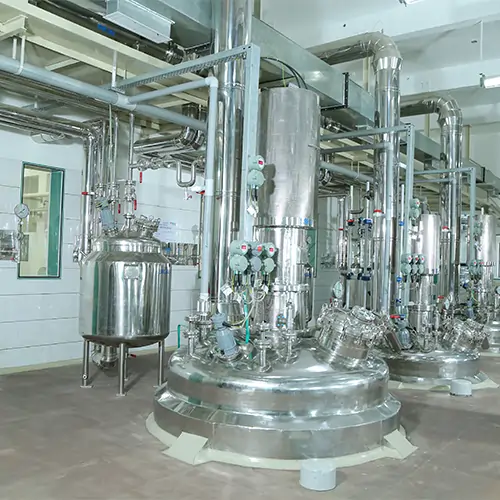
The capabilities of an API manufacturing company often become clearer once production moves beyond pilot quantities. A facility that performs well during smaller manufacturing campaigns may face different pressures when volumes increase. Available reactor capacity, production scheduling, material handling practices, and room for future expansion can all influence how comfortably a manufacturer supports ongoing commercial requirements.
An API may be manufactured in one location, formulated in another, and supplied somewhere else entirely. By the time a finished medicine reaches the market, multiple suppliers, materials, and logistics providers have already been involved.
Even an experienced API manufacturer can feel the impact of a delayed shipment or a shortage of Key Starting Materials (KSMs). In practice, manufacturing schedules often depend on factors that sit well outside the production facility itself.
SNJ Labs manufactures APIs across a range of therapeutic categories. Information related to specific products, manufacturing processes, and regulatory documentation is available based on the API under consideration.

Q.1. Does every API follow the same manufacturing process?
A: No. The manufacturing route depends on the molecule itself. Some APIs require only a few reaction stages, while others involve complex synthesis, purification, and testing procedures before release.
Q.2. What is the difference between an API and a finished dosage form?
A: An API provides the therapeutic effect, while the finished dosage form combines that ingredient with excipients and processing steps to create a tablet, capsule, injection, or other medicine.
Q.3. How is API quality verified before release?
A: Manufacturers use a combination of analytical testing, process monitoring, documentation review, and specification checks before a batch is approved for further use.