Inquiry
Contact Us Download Brochure
By SNJ Labs | Published on 07 July 2026 by SNJ Labs Pvt. Ltd.
Production doesn't stop because a laboratory is busy, but it also doesn't move very far without laboratory data. Before manufacturing begins, incoming materials are sampled and tested.
During production, additional samples may be examined to verify that the process is progressing as expected. More testing follows before a batch is released. Those checks are routine in pharmaceutical manufacturing, yet they influence decisions at almost every stage of production.
That's where quality control in pharmaceutical manufacturing fits, not as a final inspection, but as an ongoing part of manufacturing itself.
A production schedule may be ready to begin, but raw materials aren't moved into manufacturing simply because they've arrived at the facility. Samples are drawn, analytical work is completed, and only then are materials released for production.
A supplier's certificate of analysis forms part of that review, not the whole of it. That's routine pharmaceutical QC. The laboratory builds its own evidence before manufacturing starts, and raw material testing becomes one of the earliest activities in the pharmaceutical manufacturing process, not something carried out after problems appear.
Analytical data answers a specific question, but it rarely tells the whole story. A result that falls outside the expected range often leads to another review rather than an immediate conclusion.
Manufacturing records, equipment status, sampling details, and test methods may all be examined before a batch moves forward. That's a routine part of pharmaceutical testing.
Laboratories aren't expected to produce numbers alone; they're expected to produce results that can be understood, explained, and reproduced when questions arise during manufacturing or later quality reviews.
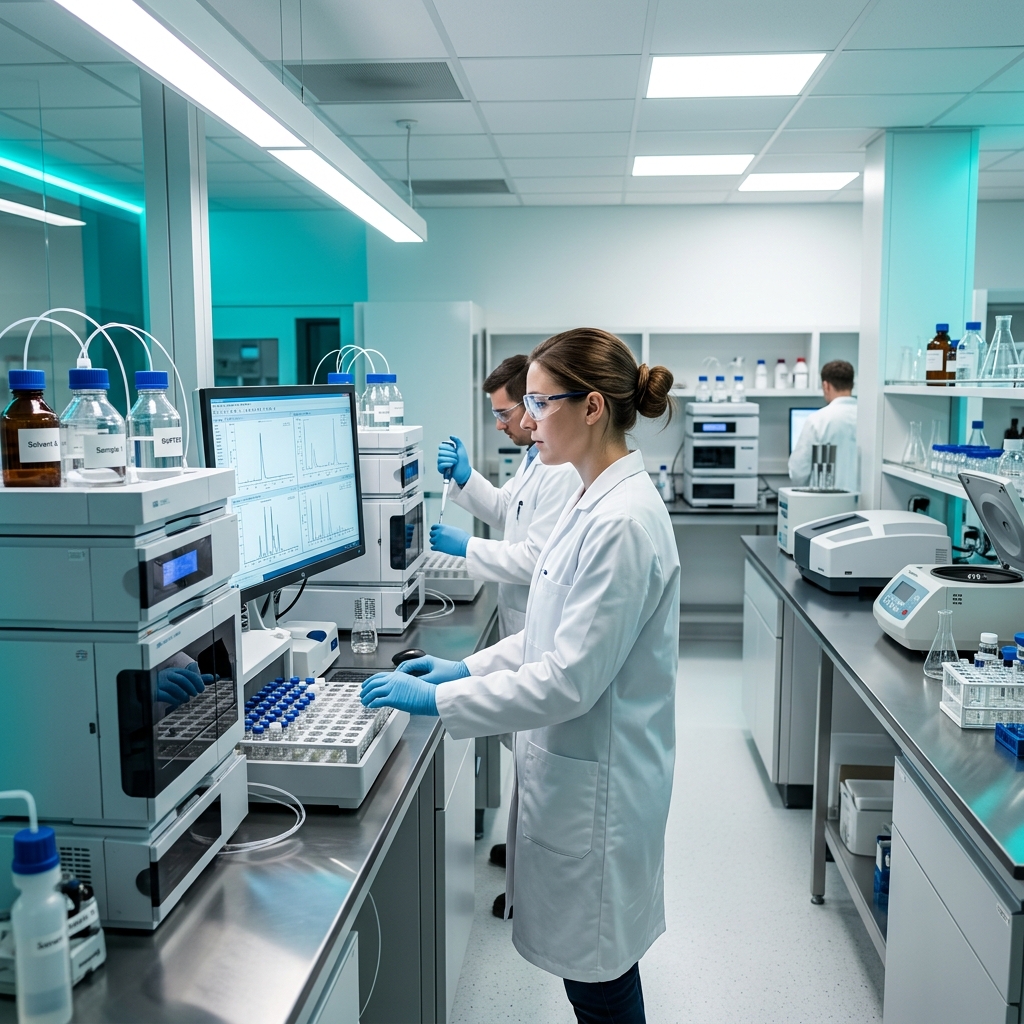
Walk into a pharmaceutical quality control laboratory and the work rarely looks the same from one bench to the next. One analyst may be examining an incoming raw material, another may be checking a sample collected during production, while someone else is reviewing a finished batch before release. The laboratory isn't repeating the same test all day, it responds to whatever manufacturing requires at that point in time.
Typical work includes:
Taken together, those activities define pharmaceutical quality control. Each test answers a different question, but all of them contribute to the same objective: understanding whether the manufacturing process is performing as expected.

A laboratory report carries weight, but it isn't the only document reviewed before a batch is released.
Test results are considered alongside manufacturing records, process observations, deviations, and any investigations completed during production.
When those records support one another, the batch review becomes straightforward. When they don't, additional questions usually follow before any material is approved for distribution.
Finished product testing remains an important part of the release process, but it works alongside manufacturing evidence rather than replacing it. That's what gives drug quality testing its practical value in pharmaceutical production.
Laboratory equipment usually gets the attention, but dependable testing starts well before the first sample is analysed. A modern laboratory is built around validated methods, qualified analysts, and procedures that produce consistent results from one batch to the next. Instruments support that work; they don't replace it.
An analytical method has to produce the same outcome when the same sample is tested under the same conditions. That's why method validation forms part of routine pharmaceutical laboratory testing. Reliable data comes from repeatable methods, not simply from advanced instruments.
Day-to-day laboratory work includes activities that rarely appear in production reports, yet they influence every analytical result.
Together, these practices support the pharmaceutical quality standards expected throughout pharmaceutical manufacturing.
Laboratories don't operate independently of the wider quality system. Pharmaceutical quality control provides the analytical evidence used to evaluate materials, monitor production, and review finished batches. Quality assurance in pharmaceuticals establishes the procedures, documentation, and controls that guide those activities from the start.
Neither function replaces the other. Effective pharmaceutical quality management depends on both, one governing how manufacturing is carried out, the other confirming that the process continues to perform as expected.
Batch release closes one stage of manufacturing, not the quality control function itself. Production continues, new batches enter the schedule, and laboratory data continues to accumulate. Looking at one batch in isolation rarely reveals much about a manufacturing process. Patterns emerge over time, and those patterns often become as valuable as the results generated from individual batches.
That broader responsibility is one reason GMP quality control remains integral to pharmaceutical manufacturing. It supports ongoing pharmaceutical compliance while aligning routine laboratory practices with internationally recognised expectations, including WHO GMP quality standards. Over time, the strength of a quality system is reflected not in a single batch, but in the consistency of many.
Quality control is measured over time. Every batch adds another set of results, another opportunity to confirm process consistency, and another point of reference for future production. That steady accumulation of analytical evidence is what allows manufacturers to make informed decisions with confidence.
At SNJ Labs, those principles remain part of our day-to-day manufacturing operations. If you're looking for an API manufacturing partner with a disciplined approach to quality, we'd be glad to discuss your requirements.
Q.1. Why isn't a supplier's Certificate of Analysis enough?
A: Manufacturers verify incoming materials through their own testing to confirm they meet internal specifications before use in production.
Q.2. How does quality control support consistent pharmaceutical manufacturing?
A: By verifying materials, monitoring production, and evaluating finished batches, quality control provides the evidence needed to maintain consistency from one manufacturing cycle to the next.
Q.3. Can SNJ Labs support custom API manufacturing requirements?
A: Yes. SNJ Labs collaborates with customers across different stages of API manufacturing, supporting projects with controlled production processes, robust quality systems, and comprehensive laboratory testing. Contact our team to discuss your manufacturing requirements.