Inquiry
Contact Us Download Brochure
By Jignesh Akbari, Director | Published by SNJ Labs Pvt. Ltd. on 24 September 2026
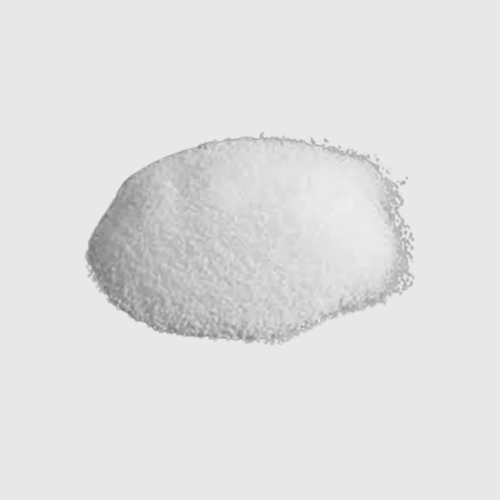
Pirfenidone is one of the key medicines for idiopathic pulmonary fibrosis (IPF), a chronic and progressive lung disease. Behind every pirfenidone tablet or capsule is a bulk active ingredient: Pirfenidone API powder. For formulation scientists, QA teams and procurement managers, understanding that powder, including its identity, physical behaviour and specifications, is the first step to a stable, compliant finished product.
This guide covers the technical profile of Pirfenidone API powder and what to look for on a specification sheet. For product details and enquiries, see our Pirfenidone API powder page.

| Parameter | Detail |
|---|---|
| Chemical class | Synthetic pyridone (5-methyl-1-phenyl-2(1H)-pyridinone) |
| CAS number | 53179-13-8 |
| Molecular formula | C12H11NO |
| Molecular weight | About 185.2 g/mol |
| Therapeutic category | Antifibrotic |
| Synonyms | Pirfenidona |
| Grades offered by SNJ Labs | IP, USP, BP, EP |
Pirfenidone is an antifibrotic agent with anti-inflammatory and antioxidant properties. Its exact mechanism is not fully understood, but it is thought to reduce fibroblast proliferation and the production of fibrosis-related proteins and cytokines, including pathways involving TNF-alpha and TGF-beta. It was among the first medicines approved specifically for IPF and is now marketed in many countries as film-coated tablets and capsules.
Pirfenidone is a high-dose drug. Common strengths include 267 mg and 801 mg per unit, and the daily dose runs to several grams. That means the API makes up most of each tablet's weight. In low-dose drugs, excipients can mask small variations in API behaviour. In pirfenidone tablets, they cannot.
As a result, the physical properties of the powder directly affect manufacturing:
Our earlier article on Pirfenidone API pricing and buying factors explains why PSD inconsistency often shows up late, during stability or bioequivalence work.
| Test | Why it matters |
|---|---|
| Description | Confirms appearance of the powder |
| Identification (e.g. IR, HPLC) | Confirms the material is pirfenidone |
| Assay | Confirms purity against the pharmacopoeial or agreed limit |
| Related substances | Controls process impurities and degradation products |
| Residual solvents | Must meet ICH Q3C and pharmacopoeial limits |
| Loss on drying | Controls moisture and volatile content |
| Residue on ignition / sulphated ash | Controls inorganic content |
| Elemental impurities | Assessed per ICH Q3D, including any catalyst metals from synthesis |
| Particle size distribution | Often agreed with the formulator to suit the process |
Specification limits should follow the pharmacopoeia named in your registration (IP, USP, BP or EP) plus any additional customer requirements. SNJ Labs performs complete analysis at its in-house QA and QC department.
Always align the grade with your dossier. A mismatch between the API specification and the registered finished product specification can trigger regulatory queries.
Learn how our warehouse maintains controlled storage before dispatch.
SNJ Labs Pvt. Ltd., established in 2013 in Rajkot, Gujarat, manufactures active pharmaceutical ingredients and drug intermediates at a WHO-GMP approved facility. We supply Pirfenidone API powder in IP, USP, BP and EP grades with documentation support for registration, alongside other APIs in our product range. See our quality systems and R&D department.
What is Pirfenidone API powder?
Pirfenidone API powder is the bulk active pharmaceutical ingredient (CAS 53179-13-8, molecular formula C12H11NO) used by formulators to make pirfenidone tablets and capsules. Pirfenidone is an antifibrotic pyridone drug used to treat idiopathic pulmonary fibrosis.
Which pharmacopoeial grades of Pirfenidone API are available?
SNJ Labs offers Pirfenidone API powder in IP, USP, BP and EP grades. The grade should match the pharmacopoeia referenced in the buyer's product registration.
Why does particle size matter for Pirfenidone API powder?
Pirfenidone is dosed in large amounts per tablet, so the API makes up most of the tablet weight. Particle size distribution affects powder flow, blend uniformity, compressibility and dissolution. Consistent PSD from batch to batch keeps the formulation process stable.
What tests appear on a Pirfenidone API certificate of analysis?
A typical COA includes description, identification, assay, related substances, residual solvents, loss on drying, residue on ignition, elemental impurities and particle size distribution where specified, tested against the chosen pharmacopoeia or agreed specification.
How should Pirfenidone API powder be stored?
Store Pirfenidone API in the original tightly closed containers, in a cool, dry place and protected from light, following the storage conditions on the supplier's label and COA. Keep containers sealed between uses to protect the powder from moisture.
Share your grade, PSD requirement and annual volume. Contact SNJ Labs or download our catalogue.