Inquiry

Contact Us Download Brochure
×
Get In Touch

We're dedicated to helping business grow and succeed. With years of industry experience and a passion for problem-solving, we offer top-level consulting service tailored to your unique needs.

instagram-thumb3

© 2026 SNJ Labs Pvt. Ltd. All Rights Reserved. | Privacy Policy

How Active Pharmaceutical Ingredients (APIs) Are Manufactured

How Active Pharmaceutical Ingredients (APIs) Are Made

By SNJ Labs | Published on 25 July 2026 by SNJ Labs Pvt. Ltd.

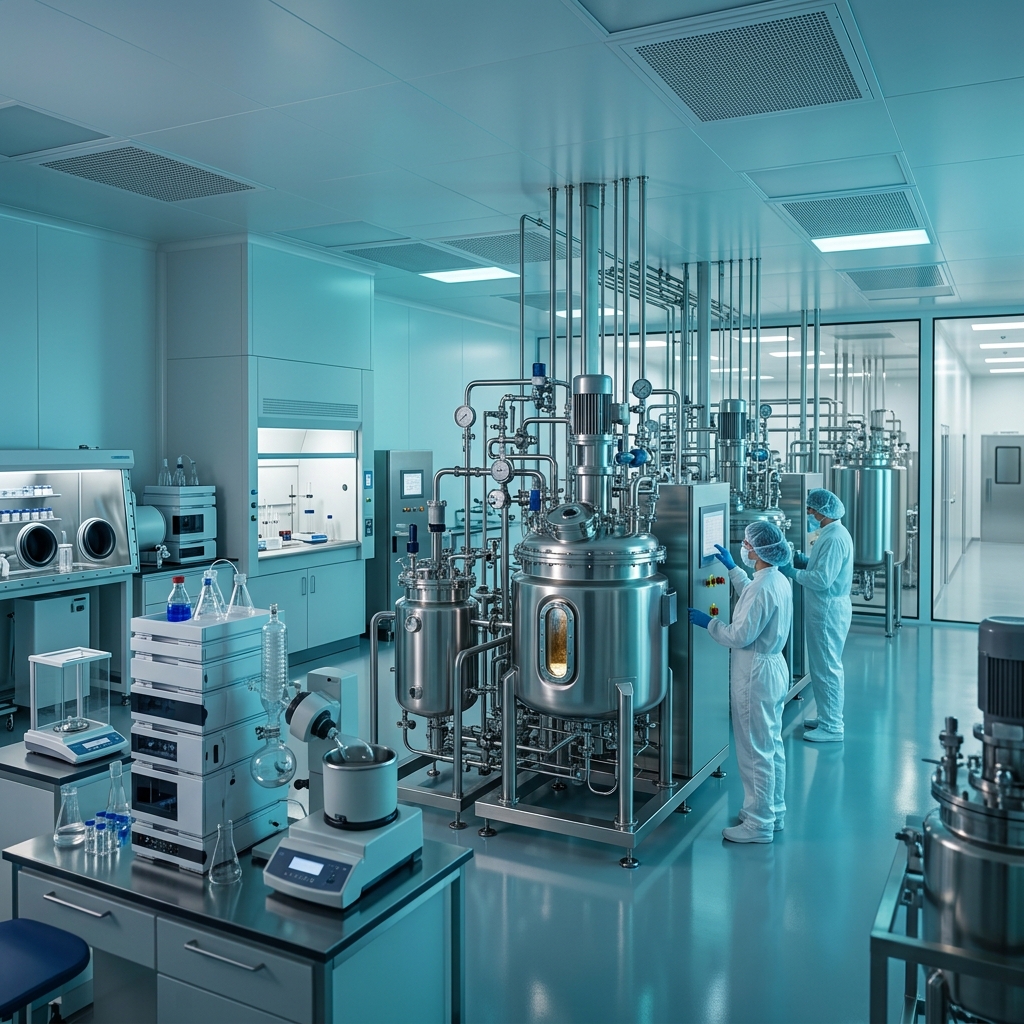
When a pharmaceutical company approves a new formulation, the manufacturing of Active Pharmaceutical Ingredients (APIs) becomes one of the most critical stages of the entire development cycle.

The finished dosage may look identical from one batch to the next, but that level of consistency depends on everything that happens before formulation begins. Material selection, process validation, impurity control, and batch testing all influence the quality of the final product.

This blog explains the API manufacturing process, from sourcing pharmaceutical raw materials to producing APIs that meet commercial and regulatory requirements.

The Step-by-Step API Manufacturing Process

Step 1: Raw Material Qualification

Before a production batch is scheduled, the focus is on the materials rather than the equipment. Every incoming lot is sampled, tested, and matched against predefined specifications. If the pharmaceutical raw materials fail to qualify, production waits. It's a routine decision in API manufacturing because correcting a problem after the reaction has started is far more difficult than preventing one at the source.

Step 2: Reaction & Process Execution

By the time production begins, the chemistry has already been finalized during development. API manufacturing isn't about finding a workable reaction anymore; it's about repeating the validated one without unnecessary variation. Operators follow an approved batch record, while critical parameters are tracked throughout the cycle. The emphasis stays on reproducibility, because commercial production depends on delivering the same quality long after the development work is complete.

Step 3: Purification & Isolation

No reaction delivers finished active pharmaceutical ingredients the moment it stops. The material leaving the reactor still carries traces of the process itself, which includes residual solvents, process chemicals, and unwanted compounds. Removing them requires a purification strategy that matches the molecule rather than a standard procedure. The endpoint isn't simply a cleaner product; it's an API that consistently meets the specification defined during development.

Step 4: Giving the API Its Final Form

At this point, the molecule exists, but it isn't ready to leave the plant. Drying removes residual moisture, while milling or sizing may be carried out if the downstream formulation requires it. The objective isn't appearance; it's producing a material that behaves consistently during further processing.

Step 5: Laboratory Testing Before Release

Production may finish on the shop floor, but batch release doesn't. Samples move to the quality laboratory for rigorous API quality control, where chemists compare analytical results against approved specifications. Until those results are reviewed and accepted, the batch remains exactly where it is.

Step 6: Release, Packaging, and Traceability

Only approved batches move to packaging. Labels, batch records, certificates, storage conditions, and shipment details all become part of the product's history. Long after the material leaves the facility, that documentation allows every batch to be traced back through the manufacturing process if required.


Quality Doesn't Depend on the Final Test Alone

A batch can pass its final analysis and still raise questions if the production record tells a different story. That's why manufacturers spend as much time reviewing documentation as they do reviewing laboratory data.

During the API production process, equipment logs, in-process observations, and analytical results are expected to tell the same story. If they don't, the investigation starts long before the material reaches a customer.

GMP Is Built Around Repeatability

Ask two production teams to manufacture the same molecule six months apart, and the expectation is simple: the outcome shouldn't change.

That's the principle behind GMP API manufacturing. Procedures are documented, equipment is qualified, and every deviation is investigated because repeatability, not just a passing test report, is what defines a dependable pharmaceutical API manufacturer working in commercial pharmaceutical manufacturing.

Choosing an API Manufacturing Partner

Two manufacturers can produce the same molecule and still deliver very different outcomes. The difference usually isn't visible in a product brochure, it shows up during audits, technology transfer, documentation reviews, and commercial production. That's why pharmaceutical companies spend considerable time evaluating an active pharmaceutical ingredient manufacturer before approving it for long-term supply.

A dependable API supplier India is expected to offer more than manufacturing capacity. Batch traceability, regulatory documentation, process consistency, and the ability to support customer audits all become part of the evaluation. Those factors rarely attract attention when everything runs smoothly, but they matter the most when timelines tighten or regulatory expectations change.

Scaling from Development to Commercial Manufacturing

A process that delivers a few kilograms in development doesn't automatically behave the same way at commercial scale. Heat transfer, mixing efficiency, and equipment configuration can influence how consistently the process performs as batch sizes increase.

Manufacturers therefore spend considerable time validating operating ranges before routine bulk drug manufacturing begins. The objective isn't simply to increase output, it's to demonstrate that the same quality profile can be maintained across every production batch.

Maintaining the Quality Profile Over Time

API manufacturing isn't judged by how efficiently a batch is produced. It's judged by whether the same process can deliver the same quality today, next month, and years later under routine commercial conditions. That level of consistency comes from disciplined process control, sound manufacturing practices, and a quality system that supports every stage of production.

SNJ Labs works with pharmaceutical companies that expect more than dependable supply. From development support to commercial-scale manufacturing, our focus remains on producing APIs that meet regulatory expectations without compromising quality or consistency. If you're evaluating a manufacturing partner for your next project, our team would be happy to discuss your requirements.

Frequently Asked Questions

Q.1. How do manufacturers ensure batch-to-batch consistency for APIs?

A: Consistency depends on strict process control, validated critical process parameters (CPPs), and continuous monitoring during routine bulk drug manufacturing to ensure every batch matches the validated quality profile.

Q.2. How does a robust quality system protect the pharmaceutical supply chain?

A: It ensures that manufacturing practices remain disciplined and traceable over time, preventing quality deviations and securing long-term, predictable supply for drug products.

Q.3. What makes SNJ Labs a reliable partner for long-term API supply?

A: Our facilities operate under strict quality systems and disciplined process controls designed to deliver consistent batch-to-batch purity and meet rigorous regulatory expectations over time.