Inquiry

Contact Us Download Brochure
×
Get In Touch

We're dedicated to helping business grow and succeed. With years of industry experience and a passion for problem-solving, we offer top-level consulting service tailored to your unique needs.

instagram-thumb3

© 2026 SNJ Labs Pvt. Ltd. All Rights Reserved. | Privacy Policy

Baclofen API Manufacturers in India: What to Look For
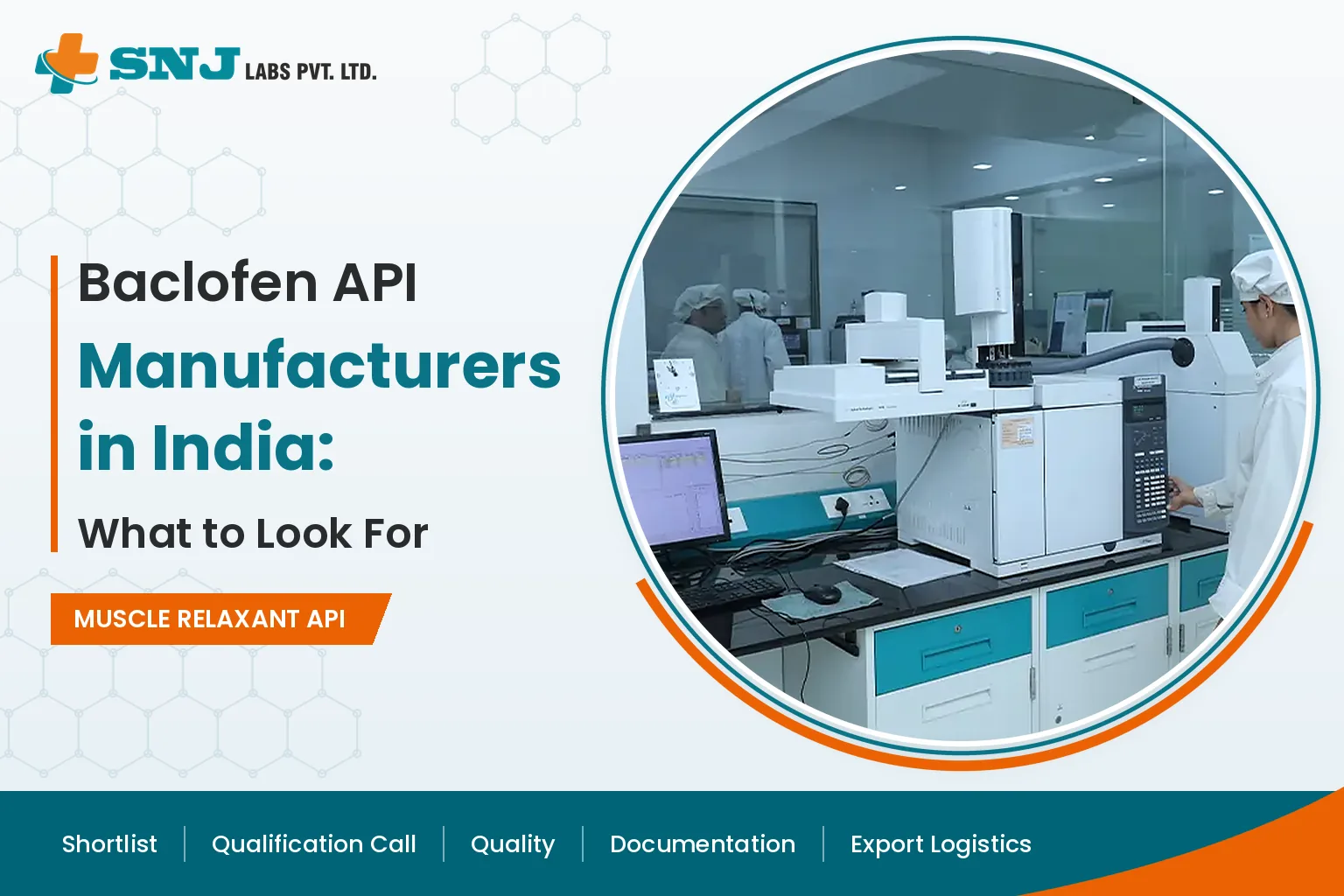
SNJ Labs banner titled Baclofen API Manufacturers in India: What to Look For, tagged Muscle Relaxant API, showing an analyst in a white coat and hairnet operating analytical instruments in a quality control laboratory, with a footer strip reading Shortlist, Qualification Call, Quality, Documentation and Export Logistics

Baclofen API Manufacturers in India: What to Look For

By Jignesh Akbari, Director | Published on 20 October 2026 by SNJ Labs Pvt. Ltd.

Most buyers searching for Baclofen API manufacturers in India already understand the molecule's technical properties; what they need to determine is which manufacturer deserves their trust. Because Baclofen is a muscle relaxant widely formulated into therapies for spasticity, the raw material directly impacts patient safety and treatment efficacy.

Consequently, a vendor appearing capable in marketing brochures can prove far less reliable when subjected to strict regulatory documentation requests. This guide walks procurement officers and regulatory managers through every step of the sourcing journey, from compiling an initial supplier shortlist to verifying the first commercial shipment.

By addressing critical qualification criteria at each stage, we highlight where buyers most commonly encounter hidden risks, ensuring you establish a fully compliant and dependable supply partnership.

Building a Shortlist You Can Defend

Start wide and cut quickly. Your list will include companies that call themselves a baclofen API supplier, others who style themselves baclofen API exporters, and a few that make the material themselves. Treat the labels as a starting point only.

For each name, jot down three things: whether they say they manufacture, where they say it happens, and how easily they answer a plain question. A shortlist built on those notes is easier to defend to your quality team than one built on whoever replied first.

The Qualification Call: What a Good Answer Sounds Like

A first call tells you more than a website. Put the same questions to every company and compare how they answer.

You askA good answer sounds like
Who makes the material, and where?A named site and a clear account of who is responsible for it.
How is a batch approved for release?A described process, including who signs off.
What happens if a batch misses specification?A plain statement of how it is handled and reported.
Can I see sample documents?Yes, with real examples of the format.
What can’t you provide?A direct answer, not a deflection.

Listen for specifics. Be cautious about answers that lean entirely on adjectives.

Quality: Reading Between the Claims

Quality statements are easy to write and hard to verify, so look for the things that can be checked. Ask how the material is tested, what the specification covers and whether retention samples are kept. Ask how complaints and deviations are recorded and whether customers hear about them.

If a certification matters for your market, ask for the document and check that it’s current and covers the product and site you’re buying from. Don’t take a logo as evidence. And remember that a certificate describes a company at a moment in time. A supplier who welcomes your questions about it is showing you something useful.

Three Kinds of Paper to Ask For

Batch & Material Documentation

These documents verify what the material is and confirm its exact analytical test results. This group includes Certificates of Analysis (CoA) and product technical specifications that demonstrate batch purity and compliance.

Shipment & Logistics Documentation

This set covers everything travelling with the consignment—detailing what is inside the boxes, how the material is packaged, how it is labelled, and its transport conditions. Essential papers include packing lists and transit declarations.

Corporate & Quality System Documentation

These documents demonstrate how the manufacturing facility operates, verifying regulatory compliance and quality management systems. Common examples include GMP certificates, site master files, and operational licenses.

Always request one real, anonymized example from each group before committing. Seeing the layout and level of detail tells you more than hearing a list. If your own market asks for something extra, raise it at the start; suppliers can usually tell you early whether they can support it, but it’s much harder to help the day before shipping.


Export Logistics: The Part Buyers Underestimate

Chemistry gets the attention, but late or mishandled shipments hurt just as much. Settle the practical side early. Which delivery terms does the quote assume, and who pays for what? How is the material packed, labelled and protected on the journey? Who books freight, and who’s responsible if something is damaged or delayed? How will you be told about a change in dates?

Think about your own end too. Check what your country requires for importing pharmaceutical ingredients and make sure the documents the supplier prepares match what your customs agent will ask for. Requirements vary by destination and change over time, so confirm them with your own advisers instead of relying on the supplier alone. A supplier who says “it depends on your port” is being honest.

Plan Your Timeline With Slack

Quoted timelines are rarely the whole story. Ask what the number includes: manufacture, testing, documentation, packing and handover to the freight company. Ask what could stretch it and how you’ll be told. Then add your own buffer for import clearance and internal testing, since both sit outside the supplier’s control.

If your launch or production plan depends on one date, an honest “it depends on testing” is easier to plan around than a promise that later moves.

When Something Goes Wrong

Eventually a lot arrives late, or a document has a mistake, or a result doesn’t match. How a supplier handles that matters more than the fact it happened. Before you order, ask who your contact is for problems, how quickly you can expect a reply and how corrections are made. Agree what happens to material that you reject.

Then watch the first order for the answer. A short, factual reply that admits the error and says what will change is a good sign. Silence or blame isn’t.

Getting Internal Sign-Off

Your quality and regulatory colleagues will want a record, not a recommendation. After the calls and samples, write a one-page summary for each supplier: what they told you, what they showed you, what’s still open. Attach the documents. Mark anything that was promised verbally but not yet written down.

That page does two jobs. It lets your team decide quickly, and it protects you if someone asks later why one manufacturer was chosen over another. For a first look at what’s available, the Baclofen API page is a good place to start.

Frequently Asked Questions

Q.1. What should I check first when comparing baclofen API manufacturers in India?

A: Who actually makes the material and where, how each batch is approved for release, and which documents come with a shipment.

Q.2. How long does it take to qualify a new supplier?

A: That depends on your own procedures and how quickly the supplier responds. Ask for documents and samples early so neither waits on the other.

Q.3. What should I confirm before baclofen API exporters ship to my country?

A: Your country’s import requirements, the delivery terms in the quote, who books freight and which shipping documents will be prepared.

Talk to SNJ Labs

To discuss your requirement with our team at SNJ Labs, send your specification, quantity and destination.

For domestic enquiries call +91 93289 11673 or email sales@snjlabs.com. For exports call +91 63579 43945 or email marketing@snjlabs.com. You can also send an enquiry or download our catalogue.